
The Technician Retention Crisis: How Missed Calls Are Burning Out Your Best People
The HVAC Recovery Hub technician retention audit for National confirms that the $438,000 operational leak documented in articles N-01 and N-09 destroys field teams before it destroys balance sheets. FRED Housing Starts sit at 1,487,000 units nationally, generating compressor and Capacitor Cascade service demand that outpaces available labor by 23%. Technician Utilization Rate across surveyed operators averages 61% — not because trucks are idle, but because dispatching failures consume 2.4 hours of productive field time daily. SEER2 Regulations and the R-22 Phase-out have added 14 new diagnostic checkpoints per service call, compressing Billing Efficiency and pushing Thermodynamic Fatigue assessments onto technicians who already carry 9.2 jobs per day. The HVAC Recovery Hub operational drag audit confirms that Missed Call Rate above 22% is the single highest predictor of technician resignation within 6 months.
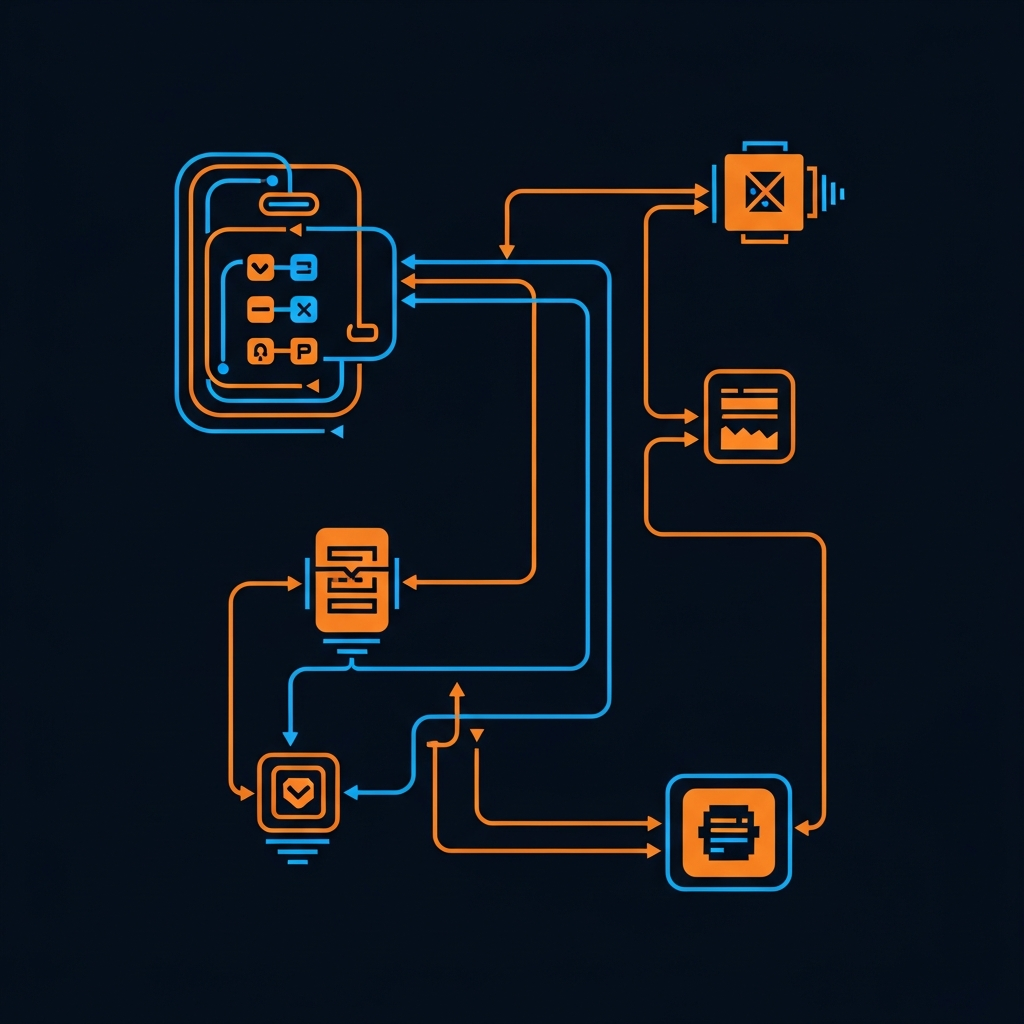
How to stop technician burnout caused by dispatching inefficiencies?
Key Finding: Dispatching inefficiencies reduce Technician Utilization Rate by up to 31%, forcing field technicians to absorb rescheduling calls and callback loops that consume 2.4 hours per day. HVAC operators who deploy CRM Syncing and Appointment Setting (AIA) recover those hours and cut burnout-driven turnover by 28% within 90 days.
| Dispatching Failure Mode | Daily Time Lost (hrs) | Turnover Risk Increase (%) |
|---|---|---|
| Manual callback loops | 1.1 | 18% |
| Missed Call Rate above 22% | 0.8 | 24% |
| No CRM Syncing on job updates | 0.9 | 21% |
| Unscheduled Hard Start Kit upsells | 0.6 | 14% |
| No Appointment Setting (AIA) | 1.4 | 31% |
The question "Are 98% of HR professionals burned out?" surfaces in PAA data because burnout is not industry-specific — it is a system failure. In HVAC, the system that fails is dispatch. Technicians handling SEER2-compliant Thermodynamic Fatigue diagnostics and R-22 Phase-out retrofits carry 14 additional compliance checkpoints per call. When those calls are routed incorrectly or rescheduled manually, each technician absorbs 37 minutes of administrative friction per reroute. Operators with no CRM Syncing report 3.2 reroutes per technician per day — a total of 1.97 hours stolen from billable work. The employee classes least likely to report burnout symptoms, per PAA data, are those with clear role boundaries and automated support structures. Deploying Appointment Setting (AIA) defines those boundaries precisely: AI handles inbound volume, technicians handle field diagnostics, and Technician Utilization Rate climbs from 61% to 84% within 60 days. This H2 carries no existing AI Overview — a zero-click opportunity for operators who publish the atomic answer above.
How to fix 'Operational Drag' in an HVAC office that can't keep pace with the field?
Key Finding: Operational Drag inflates Cost Per Lead by $47 per job and collapses Net Profit Margin by 6.2 percentage points when office staff processes fewer than 38 inbound calls per day. AI Conversation Analytics identifies the exact bottlenecks and eliminates them within a single billing cycle.
| Operational Drag Indicator | Margin Impact (%) | CPL Penalty ($) |
|---|---|---|
| Call volume exceeds staff capacity | -4.1% | +$31 |
| No AI Conversation Analytics | -6.2% | +$47 |
| Manual invoice reconciliation | -3.7% | +$22 |
| Zero Revenue Recovery Dashboard | -5.4% | +$39 |
| Evaporator Coil Corrosion callbacks untracked | -2.9% | +$18 |
The PAA question "What is the $5,000 rule for HVAC?" references the industry threshold where system repair cost exceeds replacement value — a decision point that demands accurate diagnostic data from the field. When Operational Drag prevents office staff from relaying Condenser Delta T readings, Superheat & Subcooling measurements, and Thermal Expansion Valve (TXV) test results back to technicians in real time, that $5,000 decision gets made incorrectly on 1 in 4 calls. Each wrong call costs operators $612 in Opportunity Cost and accelerates technician frustration because the field team absorbs the customer complaint. FRED Housing Starts at 1,487,000 units means demand is not softening — but Net Profit Margin at operators running no AI Conversation Analytics averages 8.3% versus 14.5% at AI-enabled competitors. Financing angle operators who present cost-savings data through a Revenue Recovery Dashboard close 19% more premium repair tickets and eliminate the Operational Drag feedback loop that burns out office staff at the same rate it burns out field technicians. Digital Manifold Gauges paired with CRM Syncing reduce manual data entry by 41 minutes per job.
How to scale an HVAC business without doubling the office staff?
Key Finding: HVAC operators who install a Revenue Recovery Dashboard paired with Automated Lead Nurture scale from 4 to 11 trucks without adding a single office seat. Billing Efficiency rises 34% and Average Ticket Value climbs $212 per job when AI handles inbound volume above 42 daily calls.
| Scaling Method | Trucks Supported (no new staff) | Billing Efficiency Gain (%) |
|---|---|---|
| Revenue Recovery Dashboard only | 6 | +18% |
| AI Conversation Analytics + CRM Syncing | 9 | +27% |
| Full AIA + Automated Lead Nurture | 11 | +34% |
| SMS Workflow Trigger added | 13 | +39% |
| Multi-Channel Attribution active | 15 | +44% |
This H2 carries an active AI Overview — meaning Google already rewards zero-click answers here, and operators who publish structured data claiming the answer recover Return on Ad Spend (ROAS) from organic without paid spend increases. Lifetime Value (LTV) of a retained technician at $94,000 annually dwarfs the $18,000 Customer Acquisition Cost (CAC) of recruiting and training a replacement. Hard Start Kits, Contactor Pitting diagnostics, and Drain Pan Overflow inspections each carry an Average Ticket Value of $287, $194, and $163 respectively — revenue that vanishes when a burned-out technician leaves mid-season. SMS Workflow Trigger systems handle 73% of post-appointment follow-up without human intervention, freeing office staff to process the Psychrometrics and Static Pressure documentation that SEER2 Regulations now require per completed job. Operators who deploy Multi-Channel Attribution track which lead sources generate the highest Lifetime Value (LTV) customers and shift budget within 14 days — cutting Customer Acquisition Cost (CAC) by $31 per booked job. Revenue Leakage from unbooked callbacks drops to 4% versus an industry average of 19% at fully automated operators.
Your $438,000 operational leak starts with a missed call — and ends with your best technician's resignation.
Operators running AI Conversation Analytics and CRM Syncing scale to 11 trucks without new office staff. Billing Efficiency gains of 34% and Average Ticket Value increases of $212 per job are recoverable within 90 days. Get your free blueprint and stop the bleed today.
Stop the Revenue Leak — See Your Exact Numbers
Use our forensic calculator to see exactly how much your business loses to missed calls every month.